
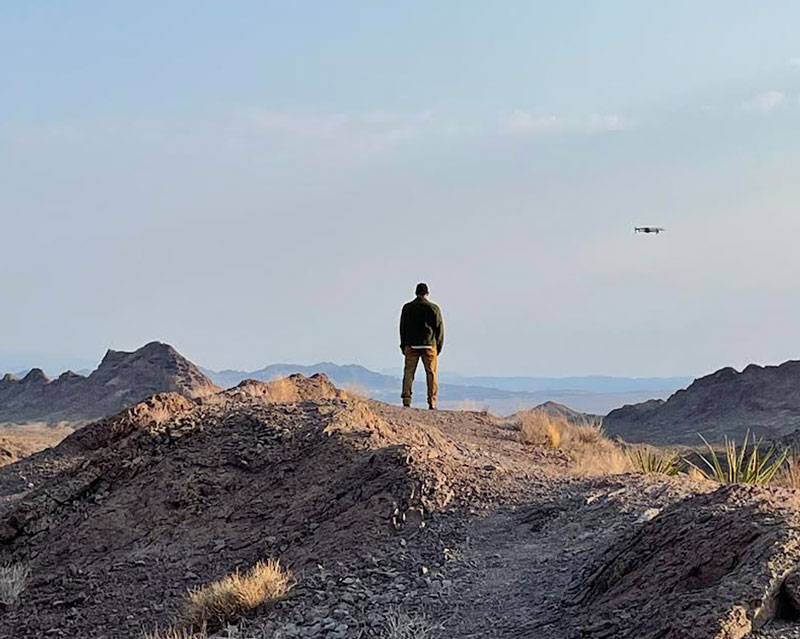
With such incredible, material progress over the last 100 years — why are there still so many people just barely getting by?
Over the last couple of years I’ve been focused on trying to answer that question. While researching, I was inspired by a book I came across called Progress and Poverty by Henry George, a late 19th-century economist, who was asking the same question. Capitalism has been an incredible economic model, but there are significant flaws, especially around income and wealth inequality. Many of these flaws are a result of the land ownership model that America was built on…
There’s a finite amount of land and that land was claimed generations ago — communities were created, tax dollars were used to invest in the land, and therefore the land increased in value over time with landowners not having to produce anything or take any risk. Land could essentially go from a barren piece of desert to a modern day city worth billions (or even trillions!).
It got me asking even more questions and thinking about a potential solution. What if that land had been owned by a community endowment? What if you took that land appreciation and gave it back to the community since they created the value? At first glance it seems impossible to turn back the clock and have a do-over. The land was claimed. But there’s plenty of land left —What if we had a clean slate to demonstrate this new model?
Once I thought through the Equitism model, I realized there was an opportunity to build a new city from scratch to demonstrate how that model could work. From there, my focus turned to making Telosa the most sustainable city in the world. From global warming to water and energy — How can we do better for future generations? And what technology and other innovations in policy and design can we embed in the city that is only possible because of the fact that we’re building it from scratch? Just imagine what’s possible with sustainable building materials, autonomous vehicles, electric aircraft, and underground movement of materials.
We’ve built a growing, diverse team of experts to continue to ask and solve these questions (and more!).
Our vision is big. It’s not only about creating the city of Telosa itself — one that sets the standard for urban, big city living. It’s also about the people — creating opportunity and equality, celebrating diversity and inclusion, and establishing a sense of pride for where we live. In the end, if we get Equitism right, it could serve as the blueprint for a new economic model that the world can learn and benefit from.
Whether we’re looking at the new economic model or the new city, we are doing all of this for a higher quality of life. Possibly the most important questions are these — How can we create a better world for our kids and grandkids? How much happier could people be? That’s what it’s all about.
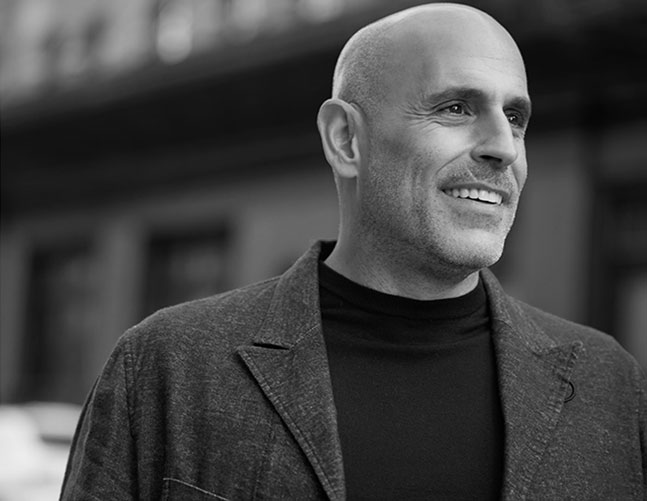
Marc Lore is a serial entrepreneur and investor having started and sold four companies, most recently Jet.com which was acquired by Walmart in 2016 for $3.3 billion. Until January 2021, Marc served as the president and CEO of Walmart U.S. eCommerce. Prior to that, Marc was also the co-founder and CEO of Quidsi, the parent company of e-commerce websites Diapers.com, Soap.com, Wag.com, and more. The company was sold to Amazon in 2011 for $550 million.
Marc is the newest NBA owner having purchased the Minnesota TImberwolves and Minnesota Lynx with his friend and business partner, Alex Rodriguez. Marc and Alex also recently announced a VC firm called VCP (vision, capital, people), focused on investing big and early in moonshot ideas.
He is the lead and largest investor in Archer, an aerospace company building an all-electric vertical takeoff and landing aircraft focused on improving mobility in cities and Wonder, a company that’s reinventing the at-home dining experience.
Marc’s largest venture is Telosa – a city he is building from scratch to test a new model for society, called Equitism. The city will eventually house five million residents and plans to set the global standard for urban living and expand human potential by becoming a blueprint for future generations.
He graduated from Bucknell University, receiving a Bachelor of Arts in business management and economics.
Bjarke Ingels
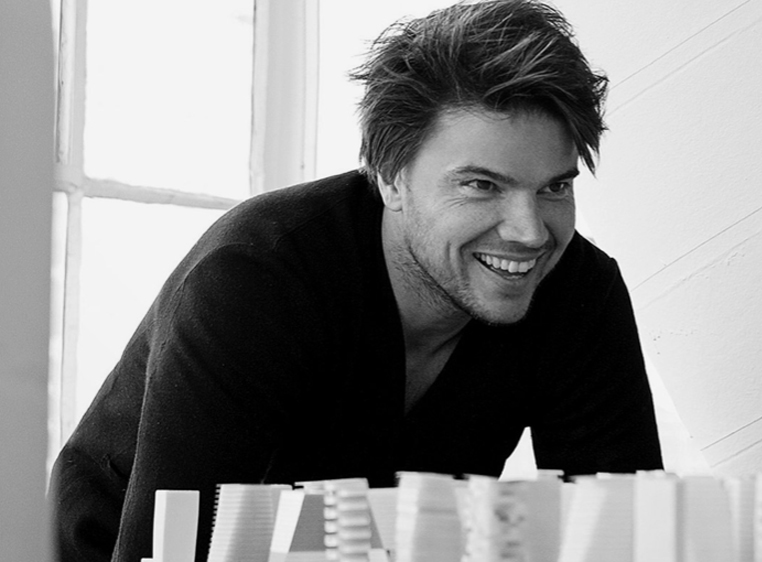
Bjarke Ingels founded BIG Bjarke Ingels Group in 2005 after co-founding PLOT Architects in 2001 and working at OMA in Rotterdam. Bjarke defines architecture as the art and science of making sure our cities and buildings fit with the way we want to live our lives. Through careful analysis of various parameters from local culture and climate, ever-changing patterns of contemporary life, to the ebbs and flows of the global economy, Bjarke believes in the idea of information-driven-design as the driving force for his design process. Named one of the 100 Most Influential People in the World by TIME Magazine in 2016, Bjarke has designed and completed award-winning buildings globally.
Bjarke was appointed Knight of the French Order Arts et Lettres and the Knight’s Cross of the Order of Dannebrog in 2019 and 2018, respectively. He was named an Honorary Fellow by the AIA in 2020, the RIBA in 2015 and the RAIC in 2014. The Wall Street Journal recognized Bjarke as Innovator of the Year in 2011, the same year he received the Danish Crown Prince’s Culture Prize. Bjarke was also awarded the Golden Lion at the Venice Biennale in 2004 and the ULI Award for Excellence in 2009. Alongside his architectural practice, Bjarke has taught at Harvard University, Yale University, Columbia University, and Rice University and is an honorary professor at the Royal Academy of Arts, School of Architecture in Copenhagen. He is a frequent public speaker and continues to hold lectures in venues such as TED, WIRED, AMCHAM, 10 Downing Street, the World Economic Forum and many more.
BIG-Bjarke Ingels Group
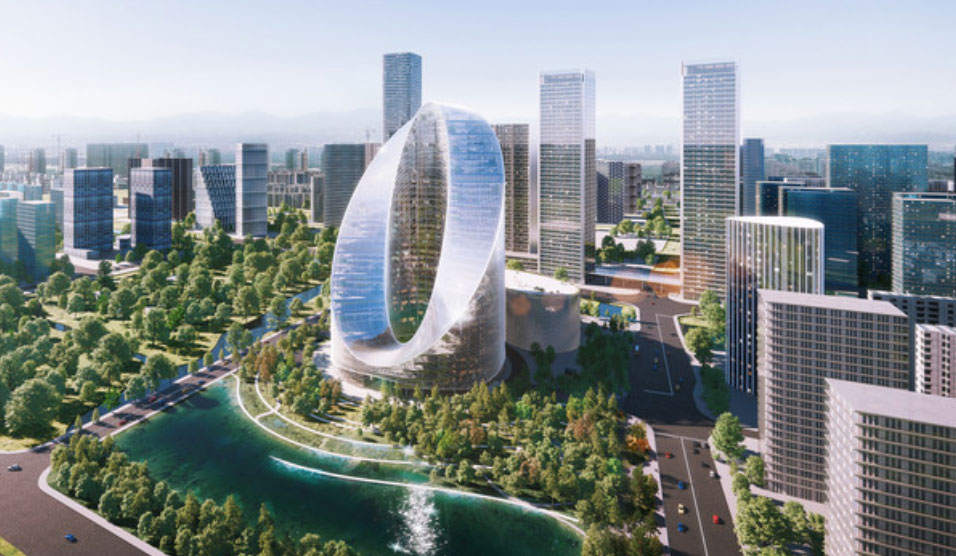
BIG-Bjarke Ingels Group is a Copenhagen, New York, London, Barcelona, and Shenzhen based group of architects, designers, urbanists, landscape professionals, interior and product designers, researchers, and inventors. The office is currently involved in projects throughout Europe, America, Asia, and the Middle East. BIG’s architecture emerges out of a careful analysis of how contemporary life constantly evolves and changes. By hitting this fertile overlap between pragmatic and utopia, architects once again find the freedom to change the surface of our planet, to better fit contemporary life forms.
The Junto Group
We are named after the original Junto Group inspired by a collection of friends that Benjamin Franklin brought together in 1727 to promote the mutual improvement of both themselves and society. It was a diverse group of people from all walks of life, dedicated to exploring ideas through open inquiry, building knowledge and developing solutions to difficult challenges confronting their community. The United States was born from many of the ideas of the original Junto Group.
Telosa will be the ultimate in collaboration, cooperation, and new ideas. We have spoken to experts in 30+ areas and continue to expand our outreach. We look forward to the exchange of different viewpoints and perspectives as we move forward. Join us!
Partners



Telosa Name Story
Telosa is derived from the ancient Greek word used by Aristotle meaning “highest purpose.” For the Greeks, the highest purpose of a great city was to have the individual and society as a whole flourish together. They believed that no individual could reach their full potential unless they lived within a strong cohesive society. This was achieved by both the individual and the community working together to create new opportunities to prosper.
Every great human achievement throughout history has been a result of an individual or group unified by and dedicated to a clear purpose. Telosa will be unified by its founding purpose, to create a more equitable and sustainable future.
Telosa Logo Story
The Telosa logo symbolizes our future city in many ways.
The star located in the center signifies our highest purpose, the meaning behind Telosa. It is our North Star, an unwavering guide on our mission to create a more equitable and sustainable future. The four sections of our logo represent the voices that will shape the direction of our city: people, government, business and endowment. The logo also signifies our three values: Open, Fair and Inclusive. The circle speaks to our open and welcoming culture. Each section is equal in size, representing our promise of fairness and access to opportunity and the coming together of the sections signifies our commitment to an inclusive society.
Equitism
Equitism (eq-ui-tism)
noun
An economic system in which citizens have a stake in the city’s land — as the city does better, the residents do better.
Imagine if all the land in Manhattan was owned by a community endowment focused on improving the quality of life for all citizens. At current estimates, the endowment would be worth over $1 trillion and could generate over $60 billion every year in income to invest back into building the physical and human capital of the city — that is 2x the current annual spend. Just imagine for a moment the impact these additional funds and resources could have on individuals and the entire community.
Land is a finite resource that appreciates in value over time in large part because of the growth and activity of the community. The land value also increases from the tax dollars that residents pay to support the city for roads, bridges, tunnels, subways, and other infrastructure. Therefore, since the community is the primary growth driver of land values, it seems fair that the community should benefit from the increase in land prices.
Equitism is a new economic model based on the premise that citizens should have a stake in the land and as the city does better, the residents do better. It retains the same system of Capitalism but with an additional funding mechanism for enhanced services — through the land. With Equitism, we will create a much higher-level of social services offered to residents, without additional burdens on taxpayers.
Equitism in Telosa starts with land — and will be driven by the city’s values. Initially, we will find uninhabited land that will allow us to fully demonstrate the power of this idea. The land will be donated to a community endowment which will use the increasing land values to fund enhanced city services — the building blocks of prosperity: higher quality education, greater access to home ownership, improved health and wellness, more innovative business opportunities, and expanded jobs and retraining. This will provide wider access to opportunity and a greater shared prosperity for all citizens.
There are many successful examples of the endowment model and the concept of land value return being reinvested back into the community to fund essential public services. Some of these examples including Alaska, Utah, nearly twenty cities throughout Pennsylvania, and leading universities, such as Stanford, are using land and other finite natural resources to provide essential support in education and other key areas that strengthen communities. While we plan to focus on a much larger scale and a broader social mission, their success gives us confidence with this strategy and approach.
Simply put, Equitism is inclusive growth.
Diversity, Equity and Inclusion Statement
- Honor mutual respect and shared dignity in all city operations
- Support businesses and organizations in developing policies and protocols to create opportunity and close equity gaps
- Eliminate organizational and administrative barriers to equitable opportunity
- Recognize and appreciate individual uniqueness as assets to the Telosa community
Telosa will accomplish these priorities through the development of a DEI dept, city DEI plan, annual assessment of the plan, and bringing in resources for continuous improvement of the outcomes of the plan. Through our commitment to DEI, Telosa will lift up all individuals and create a strong community.